
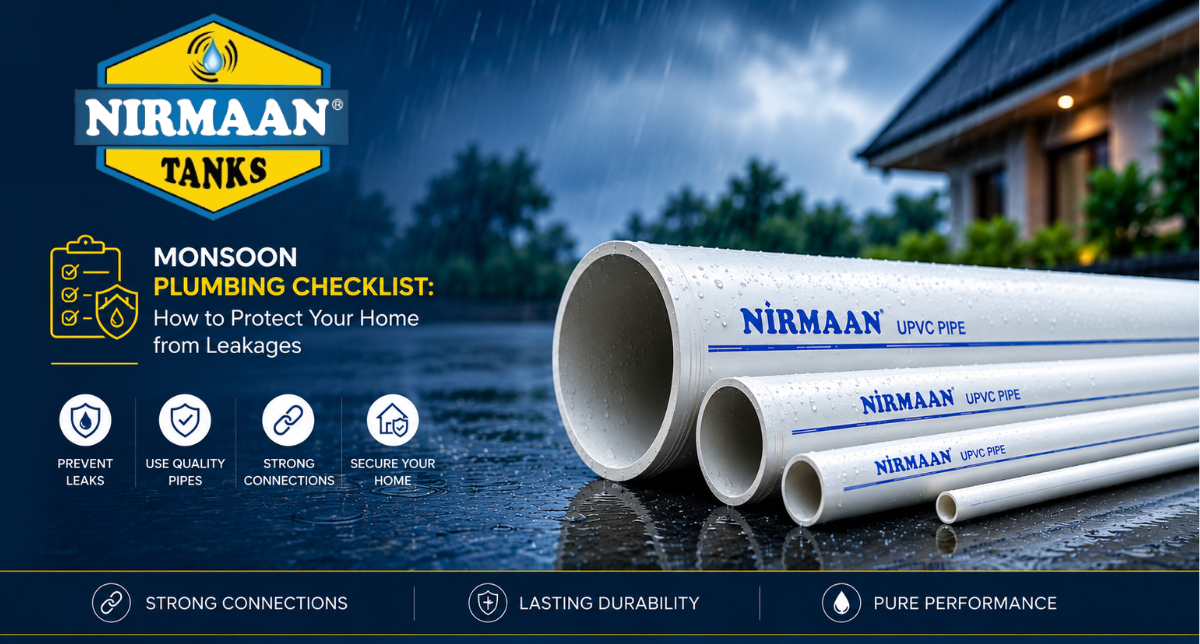
The monsoon brings relief from the scorching summer heat but for your home’s plumbing, it signals the beginning of its toughest season. Heavy rainfall, rising humidity, and water pressure surges can expose every weak joint, hairline crack, and neglected pipe in your system. And by the time you spot a damp patch on the ceiling or a seeping wall, the damage is already done.
At Nirmaan Tanks and Pipes, we believe that a little preparation before the first rain can save you months of repair headaches. Here’s your complete monsoon plumbing checklist to keep your home dry, safe, and leak-free all season long.
1. Inspect Your Water Storage Tank
Your overhead or underground water tank is ground zero for monsoon problems. Cracks around joints, loose lids, and poor sealing around the tank base can allow contaminated rainwater to seep in, compromising the quality of your drinking water along with your home’s structure.
A good-quality tank made from food-grade material like Nirmaan’s range resists UV degradation and maintains structural integrity even through heavy downpours. If your tank is over 10 years old, have it professionally inspected before this season.

2. Check All Pipes for Cracks and Weak Joints
The intersection of pipes and fittings is where leaks almost always begin. Over time, temperature fluctuations and water
pressure changes loosen joints, and the added stress of monsoon water volume can push a weak connection over the
edge.Walk through your home and check:
- All exposed pipes in the kitchen, bathroom, and utility areas for hairline cracks or discolouration.
- Under-sink connections for dripping or slow moisture buildup even a small drip can warp your cabinet floor over weeks.
- Concealed pipe sections for damp spots or bubbling paint on the wall above them which signals a hidden leak.
- Pipe joints and elbow connections, especially where pipes meet walls or floors.
Using high quality Nirmaan UPVC or CPVC pipes with secure locking fittings as recommended by leading manufacturers significantly reduces the risk of joint failure during pressure surges common in the monsoon.
3. Clear Your Drainage and SWR Lines
Blocked drains are one of the most predictable monsoon disasters, and also the most preventable. Leaves, soil runoff, plastic waste, and accumulated grime can block your Soil, Waste, and Rainwater (SWR) lines right when they need to be working hardest.
Before the season begins:
● Remove debris from all terrace drain grates, garden drains, and courtyard outlets.
● Install strainers or drain guards to stop leaves and solid waste from entering the pipe system.
A clogged drain doesn’t just cause flooding. The standing water puts pressure on your pipe walls and joints,
weakening them from the outside while the flow weakens them from within.
4. Inspect Taps, Faucets, and Bathroom Fittings
Plumbing joints around taps, basins, and shower fittings are frequent sources of slow leaks that go unnoticed until the wall or floor beneath them shows damage. The humidity of the monsoon makes existing loose fittings worsen faster.
● Check all taps for drips when fully closed.
● Look for moisture or water stains around the base of taps and basin connections.
● Apply waterproof silicone sealant around taps, drain openings, and where fittings meet the wall or countertop.
● Test shower connections and check that wall-mounted fixtures haven’t loosened.
5.Waterproof Pipe Entry Points in Walls
Wherever a pipe enters or exits a wall is a potential entry point for moisture, especially during heavy rains when water finds its way into the smallest gaps. These are often overlooked because they’re not visually obvious until the problem is severe. Check and seal:
- All points where pipes pass through exterior walls.
- The gap between the pipe and the wall opening, which should be filled with waterproof filler or cement.
- External water meter boxes and valve housings for water ingress.
- Any recently drilled holes that may not have been sealed properly after installation.

6. Secure Outdoor and Terrace Plumbing
Outdoor pipes, terrace connections, and garden fittings take a direct hit during heavy rains. Exposure to rainwater, sunlight, and temperature swings makes these sections deteriorate faster than indoor plumbing.Before the monsoon:
- Inspect all outdoor pipe fittings for cracks or corrosion.
- Secure any loosely fastened pipes with proper clamps, unsecured pipes vibrate during heavy rain, which loosens joints over time.
- Check that terrace drainage pipes are aligned correctly and that water is directed away from the building’s foundation.
- If you have a rooftop water tank, ensure it is properly covered and that the overflow pipe is directed safely away.
7. Look for Early Warning Signs Inside the Home
Sometimes leaks announce themselves before they become visible. Train yourself to notice:
- A musty or damp smell in a room that doesn’t have obvious moisture.
- Paint peeling or bubbling on walls and ceilings, even without a visible wet patch.
- Tiles that have come loose without any physical impact, often a sign of water behind the wall.
- Floors that feel slightly soft or springy in certain spots.
- An unexplained spike in your water bill, which can indicate a concealed leak.
Catching these signs early, before the monsoon hits and this gives you time to fix the problem rather than manage a crisis mid-season.
CONCLUSION
Monsoon is the best time to inspect and strengthen your home’s plumbing system before minor issues become major repairs. Regular maintenance, proper drainage, waterproofing, and the use of quality pipes and tanks can help keep your home safe, dry, and leak-free throughout the rainy season.
A simple plumbing checklist today can save significant repair costs tomorrow. Choose durable and dependable solutions with Nirmaan Pipes & Tanks and stay prepared this monsoon season.