
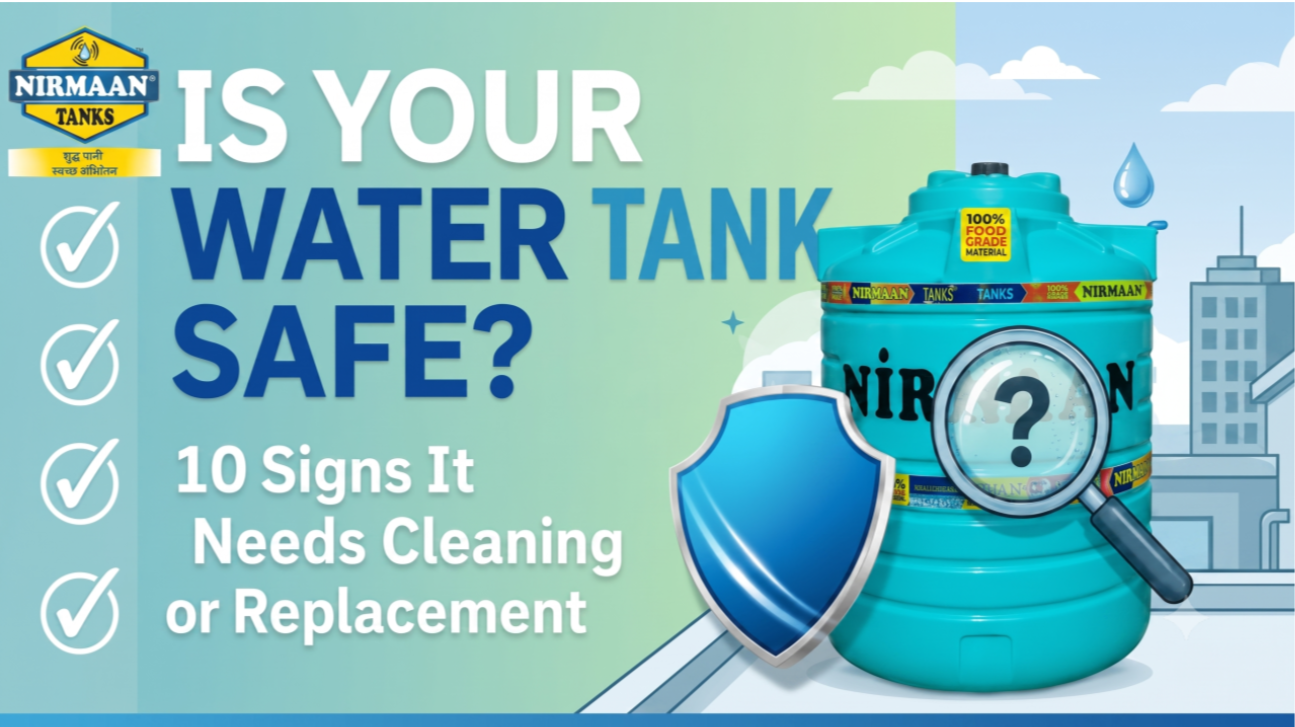
A clean water tank is essential for maintaining safe and hygienic water for drinking, cooking, bathing, and household use. However, over time, water storage tanks can accumulate sediment, algae, bacteria, and other contaminants that affect water quality. Knowing the signs that your water tank needs cleaning or replacement can help prevent health risks, water wastage, and expensive repairs. In this guide, we’ll explain the most common warning signs and how to keep your water tank in optimal condition.
Signs Your Tank Needs Cleaning
1. Water has a foul smell
Fresh water stored in a clean tank has no smell. If you notice a musty, earthy, or foul odour coming from your taps, the tank interior is the first place to look. Algae, bacteria, and organic matter accumulate at the bottom and walls of the tank over time. In the heat of Jharkhand and Bihar summers, this process speeds up significantly. A thorough cleaning with scrubbing and disinfection usually resolves this.
2. Water looks discoloured or cloudy
Clear water turning yellowish, brownish, or visibly cloudy is a sign of sediment buildup, rust contamination from inflow pipes, or algae growth inside the tank. If the discolouration disappears after letting the tap run for a minute, the issue may be in your supply pipes. If it persists, the tank itself needs attention.
3. Sediment in water
Fine particles settling at the bottom of a glass or vessel after filling is a direct sign of sediment inside your tank. This sediment can be dust, rust, sand from the water source, or biological matter. It is not harmful to touch but should not be consumed. A proper drain, scrub, and refill is the fix.
4. Visible algae growth
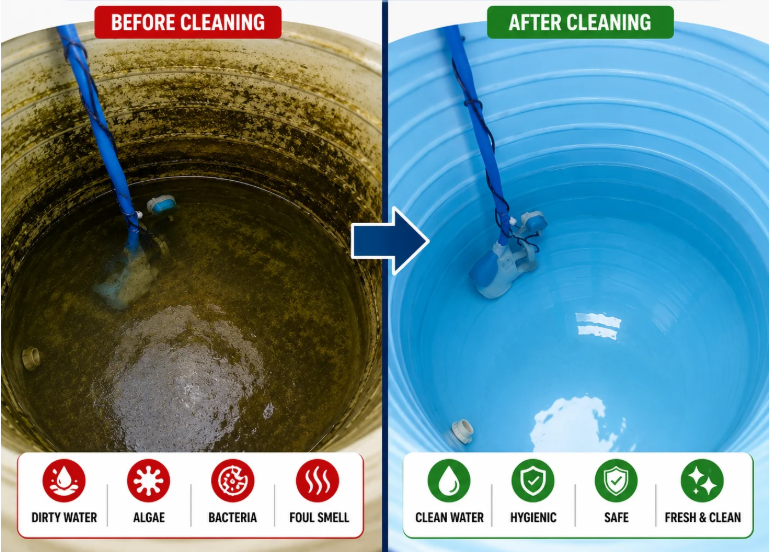
Green or black patches on the inner walls of the tank mean algae have taken hold. This happens when light enters the tank through a loose or damaged lid, or through a tank material that has lost its UV protection over time. Algae-contaminated water is not safe for drinking or cooking. Clean immediately and check the lid seal.
5. More than 6 months since the last cleaning
Even if none of the above signs are visible, a water tank should be cleaned every six months without exception. In areas where water quality is poor, supply comes from tankers, or summers are harsh, clean every three to four months. Prevention is far cheaper than dealing with a health problem after the fact.
Signs Your Tank Needs Replacement
Cleaning fixes dirt and contamination. It does not fix a tank that is structurally failing. These signs indicate it is time to replace.
1. Visible cracks or fractures
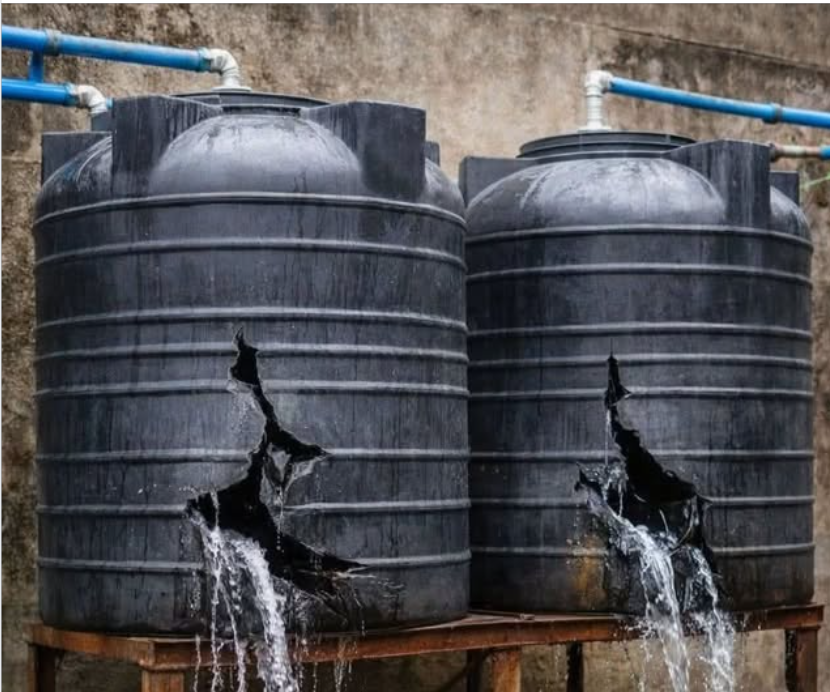
Small hairline cracks can appear due to UV degradation, physical impact, or the natural aging of low-quality plastic. These cracks may not leak immediately but they weaken the structure. Water eventually finds its way through. If you see cracks on the body of the tank, replacement is the right call, not repair.
2. Persistent water leakage
A leaking tank wastes water, creates moisture damage on rooftops or walls, and often indicates the tank wall has thinned or cracked beyond repair. Temporary sealants may hold for a few weeks but are not a long-term solution. A leaking tank that has been repaired more than once needs to be replaced.
3. Damaged or loose lid
The lid of a water tank is its first line of defence against insects, dust, rainwater contamination, and sunlight. If the lid is cracked, warped, or no longer sits flush, the tank is being continuously exposed to contamination. Sometimes a lid can be replaced separately. But if the lid thread or locking mechanism on the tank body itself is damaged, replacement of the full tank is needed.
4. Tank has turned brittle or is faded
Good quality plastic tanks are UV-stabilised. Over years of direct sunlight exposure, especially in Eastern India’s climate, lower-quality tanks lose their UV protection. The outer layer becomes brittle, faded, and chalky. At this stage, the structural integrity of the tank is compromised. Even if there are no visible cracks yet, failure is not far away.
5. Tank is more than 10–15 years old
A well-manufactured, multi-layer roto-moulded tank with proper UV protection has a life of 10 to 15 years under normal conditions. Beyond this, even if the tank looks fine externally, internal degradation may have occurred. If your tank is approaching or has crossed this age, a proactive replacement is the right decision, not waiting for a failure.
6. Unusual taste even after cleaning
If your water has a persistent plastic or chemical taste even after a thorough cleaning, it may indicate that the inner food-grade layer of the tank has degraded. This layer is what keeps stored water safe for consumption. Once it breaks down, no amount of cleaning will restore it. The tank must be replaced.
How Often Should You Clean Your Tank?
Every 6 months as a standard. Every 3 to 4 months if your water supply is from a borewell, tanker, or a source with visible sediment. Always clean before the monsoon season and immediately after a long dry period.
CONCLUSION
Regular water tank cleaning and timely replacement are essential for maintaining clean, safe water for your family. Watch for signs such as foul odours, sediment buildup, algae growth, cracks, and leaks. Addressing these issues early can improve water quality, reduce maintenance costs, and extend the life of your plumbing system.
If your current tank is nearing the end of its lifespan, consider upgrading to a high-quality multi-layer water tank designed for Indian weather conditions. Nirmaan Tanks are engineered with UV protection, food-grade inner layers, and durable roto-moulded construction for long-lasting performance.